Steel Testing

Empowering Progress, Engineering Excellence

Steel testing involves a range of procedures to assess the mechanical, chemical, and physical properties of steel, a critical construction material used in various applications such as buildings, bridges, pipelines, and more. Steel testing ensures that the material meets specified standards and performance requirements, contributing to the safety, durability, and quality of structures.

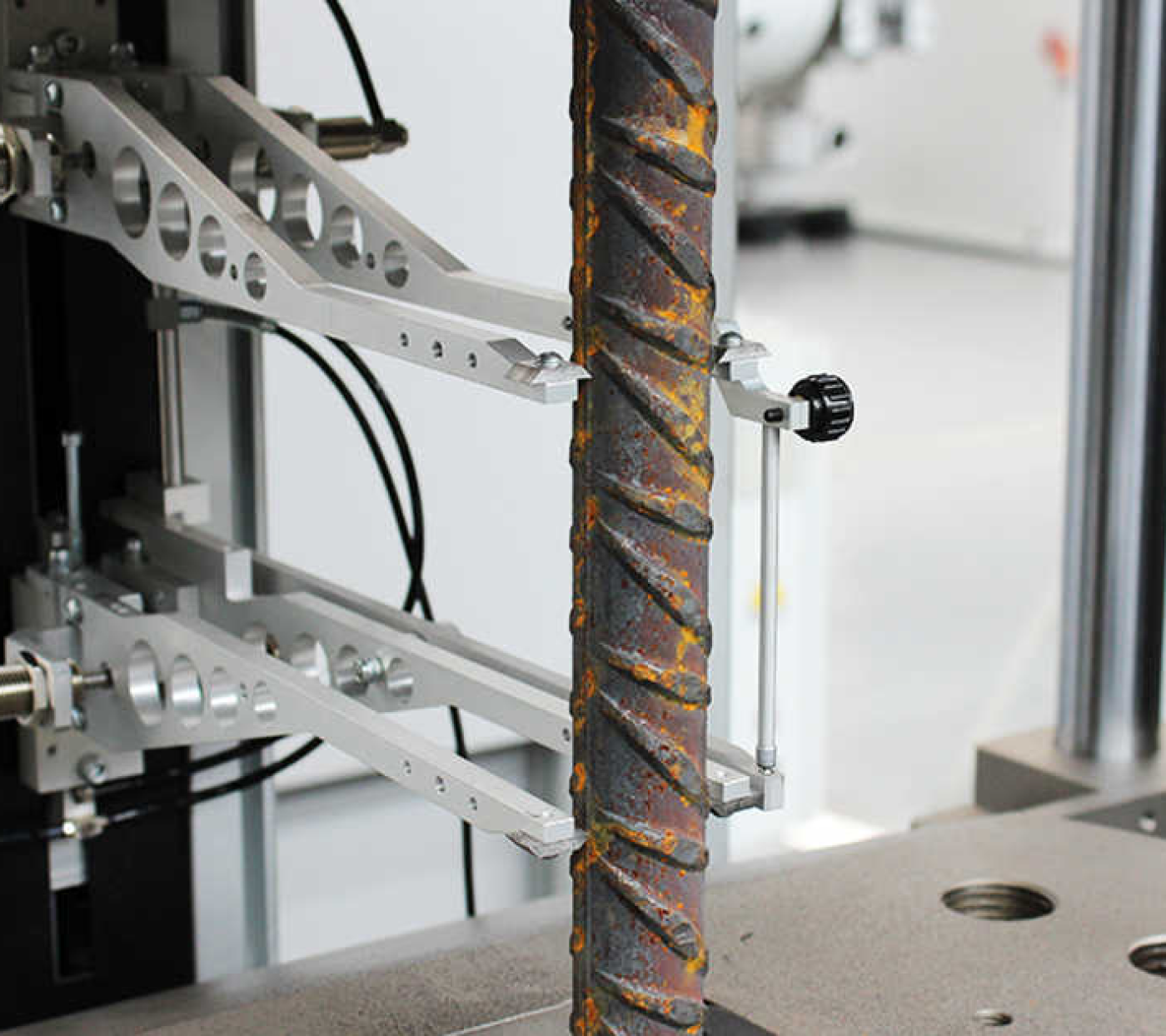
Here are some common tests conducted on steel tests:

1. tensile Test

The tensile test, also known as the tension test, evaluates the mechanical properties of a material under axial loading. In this test, a specimen of the material is subjected to an increasing axial load (tensile force) until it fractures. The primary goal of the tensile test is to determine key parameters like yield strength, ultimate tensile strength, and elongation. Yield Strength: Yield strength is the point at which the material begins to exhibit plastic deformation without a significant increase in stress. It is a crucial property as it marks the transition from elastic to plastic behavior. The yield strength is typically determined using a specific offset from the linear portion of the stress-strain curve (0.2% offset method is commonly used).

2. Elongation Test

Elongation is the measure of the extension of the material at the point of fracture compared to its original length. It gives an idea of the ductility of the material how much it can stretch before breaking.